Wednesday, 29 May 2013

Exaile Makes Playing Music Simple and Stress-Free


There's something disconcerting about using software full of features you don't need -- especially if the unwanted options are always in your face. Exaile is a music player that knows what most people want most of the time, and it gives you a great deal of flexibility in how to put its robust features to use. The result is elegant simplicity -- and a great listening experience.


The Exaile music player hits a high note as a solid performer with trimmed-down features that make it elegant yet easy to use.


The Linux desktop has an impressive list of good music playing apps, so choosing a favorite title is a difficult task. The decision almost always comes down to personal taste rather than feature sets or GUI.
Exaile ranks high on my player list for what it does not have. It spares me having to traipse through a bigger-than-needed set of features. Not being an audiophile, I find I'm intimidated by the tweaking options other music players constantly display, even though I rarely have occasion to use them.
That doesn't mean Exaile is a lightweight music app. On the contrary, it is a handy alternative to solid player apps such as Amarok, Banshee, Clementine, Rhythmbox, Audacious and Songbird. In fact, it incorporates some of the best user traits from several of these music players. 

Cool Player Tools 

Exaile's designers did what every nerdy software reviewer would ideally love to do. They assembled an ideal application that includes the choicest features from a variety of music players.
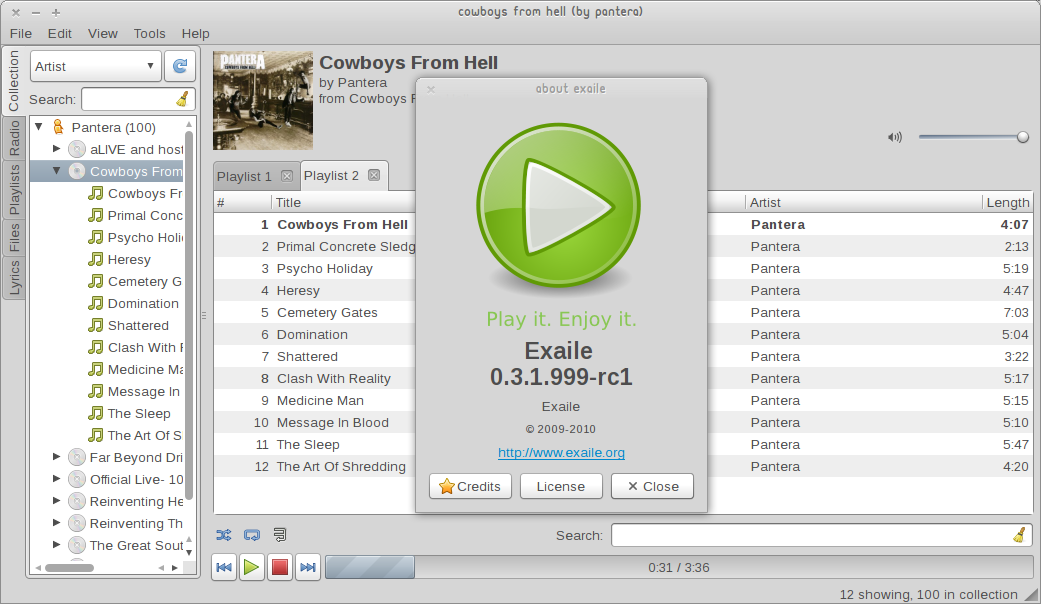
For example, tabbed playlists let you open your music choices your way. You can open multiple playlists all at once or as you want them. Exaile makes it easy to keep more than one playlist open and drag files from one to the other.
The built-in Shoutcast directory browser lets you to listen to Internet radio broadcasts. Even better might be the ability to access Stream favorites built into the collections listings. Other included features are automatic fetching of album art and lyrics, as well as gathering artist/album information via Wikipedia.

Bottom Line

If you want a music player that does not impose its own rigid framework on how you use it, try Exaile. It is not the most feature-complete player available, but its options are the ones you will use all the time.
It is a pleasing alternative to cluttered and feature-heavy music players. You will not spend much time figuring out how to use it.


For more information: Visit Here 

Tuesday, 28 May 2013

Galaxy S4's Camera Wins Shootout With iPhones


First came a report that gave higher grades to the Samsung Galaxy S4's display over the iPhone 5. Now a French digital optics firm says the new Samsung smartphone's camera does better than the current and former iPhone models when it comes to image quality and color reproduction. The report, however, does highlight the question of how many megapixels is enough for the average consumer. 


The Samsung Galaxy S4's rear-facing camera beats those in the iPhone 5 and 4S as well as other Samsung smartphones, according to a report from digital image specialists DxO Lab.
The 13 MP GS4 camera tallied an overall DxOMark score of 75, while the iPhone 5, iPhone 4S, Galaxy Note II and Galaxy S III all scored 72.
First place was taken by the Nokia 808 PureView, which has a camera with 41 MP resolution for a DxOMark score of 77 points.
The improving quality of smartphone cameras could force digital cameras into a niche.
"As camera quality continues to improve in smartphones, the use case for carrying a dedicated camera continues to decrease over time," Michael Morgan, a senior analyst at ABI Research, told TechNewsWorld. "My girlfriend has an iPhone 5 ... and she is a Mac head to the core, and when she saw the shots I was taking with the S4 she was strongly impressed." 

Inadequate functioning in low light "is currently one of the biggest weaknesses of today's cellphone cameras," Morgan said. "Other issues are stabilization and the frame rates of video capture."
Improvements will come over time from software -- better noise reduction techniques - and the faster, more powerful processors that can handle full 1080p and even 4K video at 120 frames per second, Morgan said. Camera sensors will also improve.
Still, "Why would you go with a 12-16 MP digital camera that costs between $100 and $200 when you can get a smartphone like the GS4 which can give you a similar quality of pictures but with more value added services, like the ability to make phone calls -- unless you're into photography and prefer using a high-end camera with detachable lenses?" asked Julien Blin, a directing analyst at Infonetics Research.
Further, the popularity of apps like Instagram lets consumers "pretty much recreate neat DSLR-quality pictures without having to buy a high-end digital camera," Blin told TechNewsWorld.

Saturday, 25 May 2013

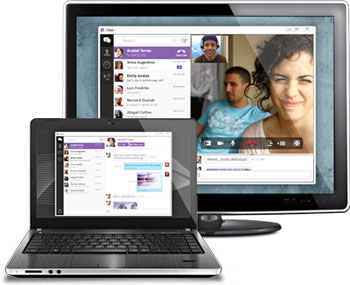
Skype Rival Viber Joins the Desktop Phone, Video Chat Party

It's starting to get a little crowded on computer desktops for phone and video calling services. Viber, a mobile messaging app that has quickly gained 200 million users worldwide, announced this week its availability for PCs and Macs. Those taking bets on a Skype-Viber showdown, however, should consider the latter's technology and what it can -- and can't -- enable for users.

Viber, a proprietary cross-platform instant messaging VoIP app for smartphones, is now available for Windows and Mac OS X desktops, Viber Media announced on Tuesday.


The mobile version of Viber runs on Android, iOS, Symbian and some versions of the BlackBerry and Windows Phone OSes.
Viber works on both 3G and WiFi networks. The app is currently free to download, although the company reportedly plans to begin monetizing its service later this year.
The application has been viewed by some as a competitor to Skype. It claims to have more than 200 million users worldwide.


What Viber Brings to the Desktop
Activating the Viber Desktop app requires the user to have a cell phone since the service is tied to cell phone numbers. Users key in their mobile number, get a confirmation code on their phones, and the desktop is ready to go.
Viber immediately syncs a user's mobile phone contacts to the desktop and will do so continuously.
Users can transfer calls seamlessly between desktops and their mobile devices running Viber with a click or tap. Received and sent messages are shown on all devices, but only the device currently being used will beep. All messages and conversations are synced among all devices, so deleting them from one device deletes them from all.


Viber Desktop offers video calls so users can make desktop-to-desktop calls to friends just as they would with Skype and Google+. This feature is still in beta and is not yet available to mobile users.
Viber supports several languages.


Nvidia's GTX 780 Boosts Performance With Less Tweaking


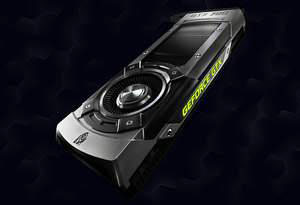
Nvidia's new GeForce GTX 780 graphics card provides better, faster performance without overheating. It also supports Nvidia's ShadowPlay technology, which lets the GPU analyze a system and update drivers so gamers don't have to do. "Gamers just want to get into the game and play. Messing with drivers and doing manual optimizations gets in the way of the experience," said tech analyst Rob Enderle.

With a slew of advanced action games for the PC on deck for release later this year, including Activision's just announced Call of Duty: Ghosts and Electronic Arts' Battlefield 4, Nvidia has introduced a graphics card that will provide top-notch performance for gamers.


The GeForce GTX 780 GPU is the latest evolution in Nvidia's line of powerful Kepler-enabled processors. It features 2,304 cores, along with 3 GB of high-speed GDDR5 memory.
It also supports Nvidia's newest array of gaming technologies -- including the PhysX and Nvidia TXAAA -- and offers drivers to reduce frame time variations and provide a smoother frame delivery, according to the company.
The card is now shipping to partners and will be available in systems next month. The reported price of the GeForce GTX 780 is US$649.

"This card is squarely aimed at the hardcore gamer community -- not only because of the price point, but also all the bells and whistles that it offers," said Lewis Ward, research manager for gaming at IDC

Friday, 24 May 2013

AMD Stakes Out Mobile Territory With New Low-Power Chips


AMD sees where the trends are heading with tablets, hybrids and thin laptops, so it has planted its flag in this neighborhood of the mobile sector with three new APU lines. The company is touting lower power consumption but a considerable boost in graphics performance, so it's not just the smaller devices that are all the rage, but gaming-centric and touchscreen laptops that are targets for AMD's new chips.

Perennial Intel competitor AMD on Thursday launched three additions to its 2013 A-Series and E-series mobile accelerated processing unit family.
They include the Elite Mobility APU, previously code-named "Temash," and the Mainstream APU, formerly code-named "Kabini."
Both are system on a chip solutions based on AMD's "Jaguar" microarchitecture for low-power processors.
They "are the first single-chip quad-core x86 SoCs in the industry, designed for touch small form-factor Windows notebooks, tablets and hybrids [with screens measuring] 13 inches and below," Gary Silcott, a senior manager at AMD, told TechNewsWorld.
Jaguar "is a higher performance follow-on CPU to 'Bobcat,' the core inside 'Brazos,' our top-selling APU of all time," Silcott said.
"This is a new generation of processor cores that are more power-efficient than anything AMD has produced," said Jim McGregor, principal analyst at Tirias Research. "However, it isn't just about the CPU, it's about the entire chip, especially the graphics."
 

18-year old wins award for invention that could charge a smartphone in 30 seconds or less


With semiconductor manufacturers pushing, not only the speed of our mobile devices with every new iteration, but their battery life as well, many Android users today are finally comfortably enjoying more than a full day’s usage from our smartphones and tablets. Still, there are a few YouTube addicts, game-oholics, or other heavy users that are still able to make short work of just about any sized battery. The problem with our current lithium ion batteries isn’t just their size (which has been growing larger to match bigger devices), it’s also how long they take to charge (especially in a pinch).
Wouldn’t it be nice if you could play Need for Speed until your battery was completely dead, find a power outlet, then fully charge your Nexus 5 in 30 seconds flat? Well, that future is looking a little bit more like reality after Eesha Khare — an 18 year old high-school student from Saratoga, California — created an energy storage project that won her the Intel Foundation Young Scientist Award of $50,000 at the Intel Science and Engineering Fair.


Eesha developed a tiny supercapcitor that is small enough to fit inside a cellphone battery and charge it fully within 30 seconds. What’s more is her tiny supercapcitor is capable of lasting 10,000 recharge cycles (as opposed to 1,000 in standard lithium ion batteries), and can easily fold, bend, or roll up, while still retaining its “electro chemical properties.” Besides just smartphones and tablets, this technology could also be applied to even higher capacity batteries like those found in automobiles.
It’s clear that with HD streaming, console quality games, and bigger HD displays, something needs to be done to make our devices more power efficient. Where we often think throwing more mAh’s at a device is the only solution, charging them quickly is a factor many of us may have overlooked. My question for you is, due to the nature of superconductors, would you accept shorter overall battery life if your device was able to fully charge in 30 seconds? Or do you find that an hour to 2+ hours charge time is acceptable if your battery can take you throughout an entire day?


Teens Starting to See Facebook as Old and Creepy


It's hard to give up Facebook once you're entrenched, but teens may be pulling away from the social network, and that could deter the next generation of adolescents from even signing on. The trouble with Facebook, as teens told Pew Research in some recent focus groups, is that it's old -- and stupid and annoying. Too much drama and not enough privacy. Twitter, on the other hand, is fine.

Facebook may have a budding problem on its hands with its teenagers, suggests a report released Tuesday by Pew Research Center.
Teens expressed waning enthusiasm for Facebook in focus groups, according to Pew, saying they disliked the growing number of adults on the site, were annoyed by "inane" status updates, and viewed the drama commonly played out on Facebook as draining. Finally, managing their reputation on Facebook was stressful they said.


 Teens seemed to be far more favorably disposed toward Twitter than in the past, Pew found. Twenty-four percent of online teens said they used Twitter, up from 16 percent in 2011.